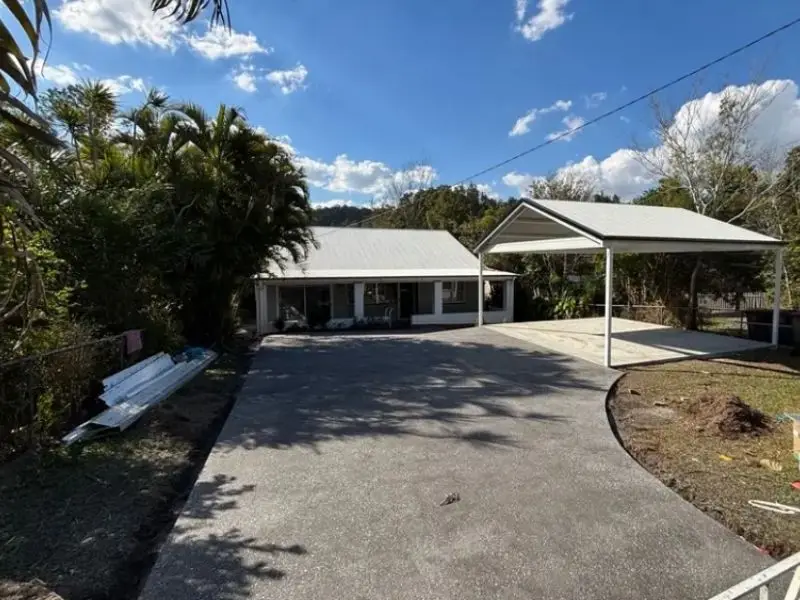
Not Every Crack Means the Same Thing
A cracked driveway does not automatically mean you need to rip it out. Some cracks are cosmetic, some are structural, and confusing the two leads to either unnecessary spending or putting off work that genuinely needs doing.
The key is knowing what you are actually looking at before you make any decisions.
Cracks That Are Usually Cosmetic
Hairline cracks that run across the surface without any vertical displacement are common in older concrete. They form as the slab dries and shrinks over time, and in most cases they do not affect the structural integrity of the driveway.
Surface crazing, which looks like a fine network of shallow cracks, falls into the same category. It is largely a visual issue, often linked to how the surface was finished during the original pour.
Shrinkage cracking and cracking at corners or around penetrations can point to workmanship issues in the original pour, including poor curing or inadequate control joints. These are worth monitoring, but a surface crack that sits flat and has not widened over time is rarely a reason to replace the whole slab.
Signs the Slab Has a Structural Problem
Structural failure looks different. The slab is no longer sitting flat, moving as one unit, or draining the way it should.
Lifting and Sinking
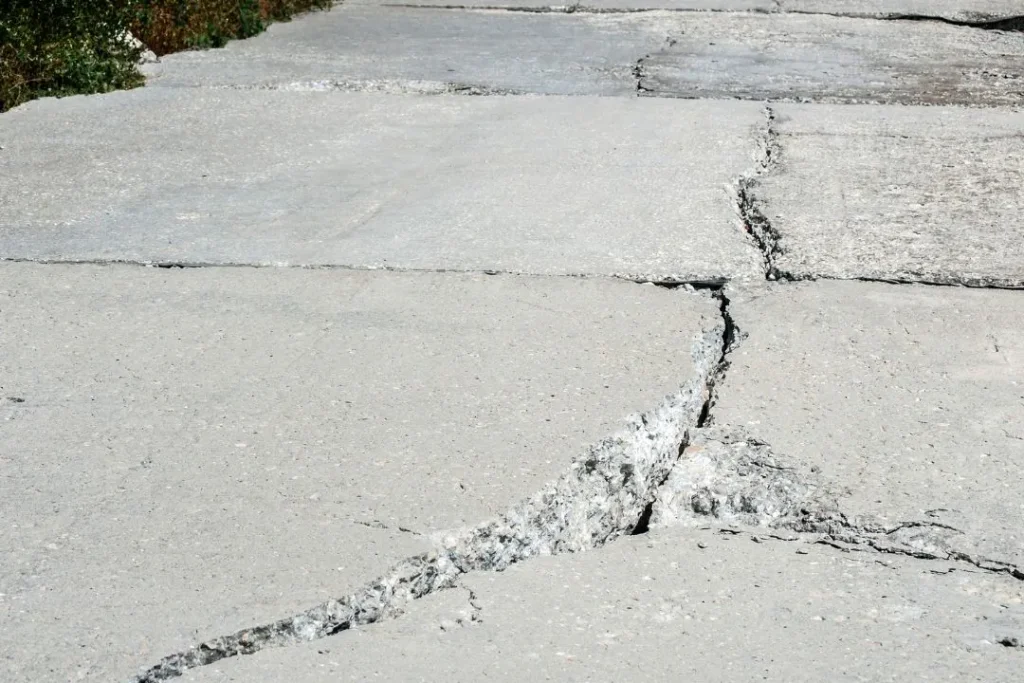
When sections of the driveway rise or drop relative to each other, the base beneath the slab has shifted. This is common in areas with reactive clay soils, where seasonal moisture changes cause the ground to expand and contract. That kind of soil movement can lift and fracture a concrete slab over a number of years, particularly in the greater Brisbane and Logan region where clay soil movement is a known issue for property owners.
Once the base has moved significantly, patching the surface does not fix the underlying problem. The slab will continue to shift.
Trip Edges and Raised Joints
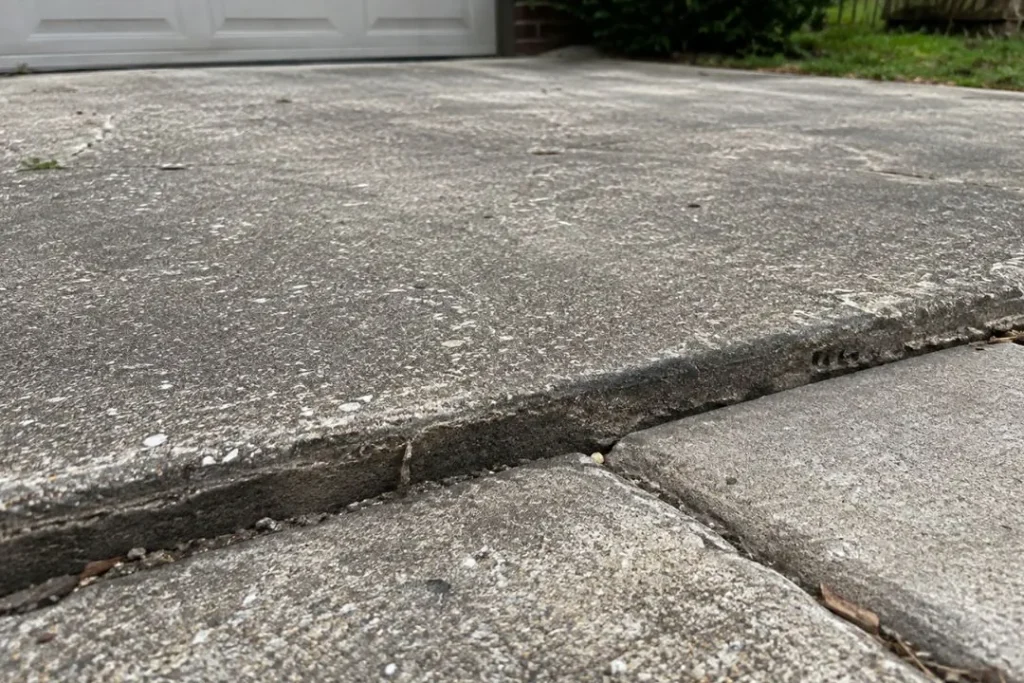
A height difference between two sections of concrete is a safety hazard, not just a cosmetic issue. If a panel has lifted more than 10 to 15 millimetres above an adjacent panel, it creates a genuine trip risk. Grinding down the edge is a short-term fix, but if the cause is ongoing ground movement, the problem will return.
Tree Root Damage
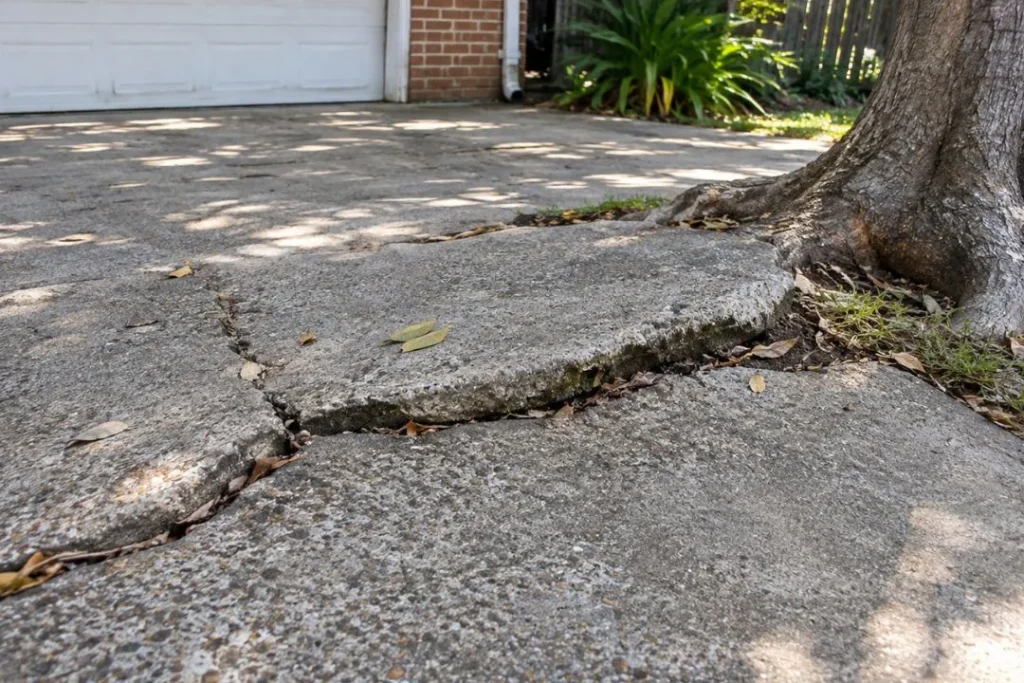
Roots from established trees can push up beneath a slab with enough force to crack and lift entire panels. Once roots have worked their way under the concrete, the damage is rarely limited to one spot. Removing the slab, dealing with the root system, and rebuilding on a properly prepared base is usually the only lasting solution.
Widespread Cracking Across Multiple Panels
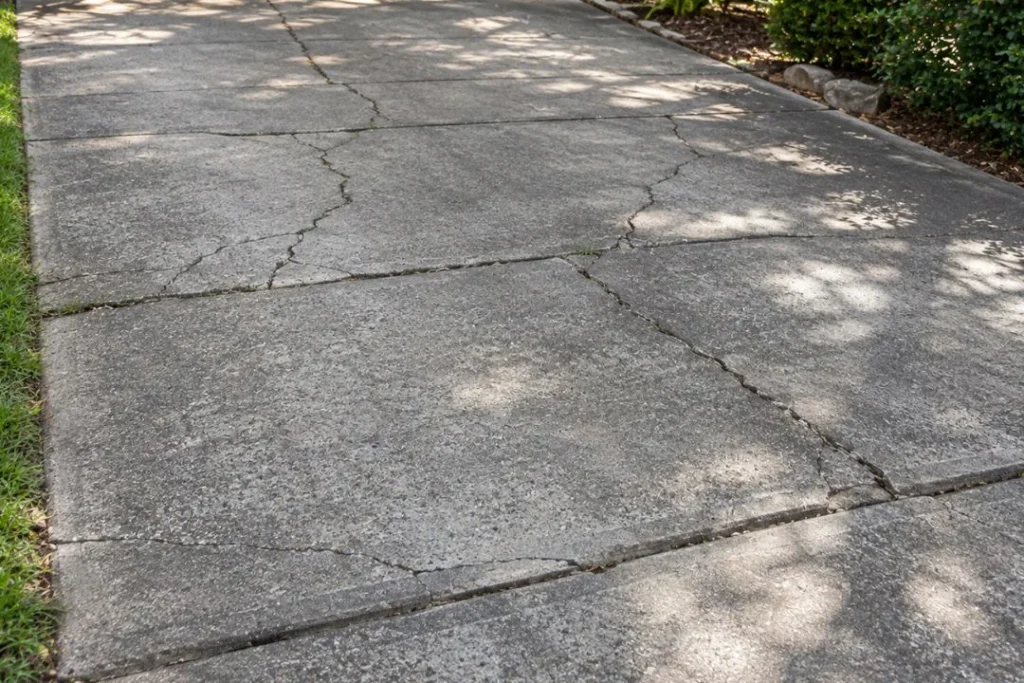
A single crack in one panel is very different from cracking that runs across most of the driveway. When the damage is widespread, patching becomes a losing battle. You end up spending money repeatedly on repairs that do not address why the cracking is happening in the first place.
Poor Drainage and Pooling Water
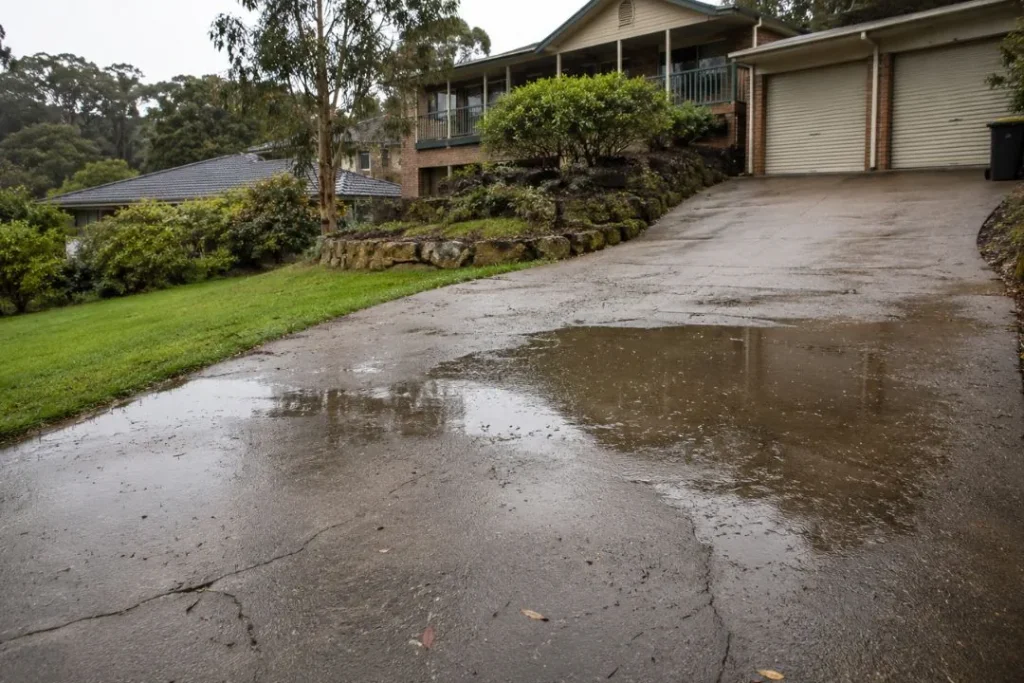
A driveway that pools water after rain either had poor falls from the start or has settled unevenly over time. Standing water accelerates deterioration and can cause water to track toward the house. If the falls cannot be corrected by resurfacing, the slab needs to come out.
When Repair Makes Sense
Crack repair, joint sealing, and surface resurfacing are reasonable options when the slab is structurally sound, sitting flat, and the damage is limited to the surface layer. A concrete professional can assess whether the base is still stable before recommending any repair work.
If you have been keeping up with basic driveway maintenance and the slab is otherwise in good condition, targeted repairs can extend its life meaningfully. Understanding what causes cracking in concrete driveways can also help you avoid repeating the same problems after any repair work is done.
What a Full Replacement Actually Involves
A concrete driveway replacement is not just pouring new concrete over the old. The existing slab has to be broken out and removed, which is a significant part of the job in terms of labour, equipment, and disposal costs.
Once the old concrete is gone, the base is assessed and prepared. If the sub-base has been compromised by root damage, poor compaction, or soil movement, that needs to be addressed before anything is poured. Skipping this step is how a new driveway ends up with the same problems as the old one.
Control joints are then planned and placed to manage where the concrete will naturally want to crack as it cures. The thickness of the slab, the mix design, and the reinforcement all factor into how the finished driveway performs over time. For residential concrete driveways, a minimum slab thickness of 100 millimetres is standard, with heavier vehicle access requiring more.
Falls are set during the pour to direct water away from the house and toward the kerb or a drainage point. Getting the falls right from the start avoids the pooling issues that often plague older driveways.
Workmanship and the Original Pour
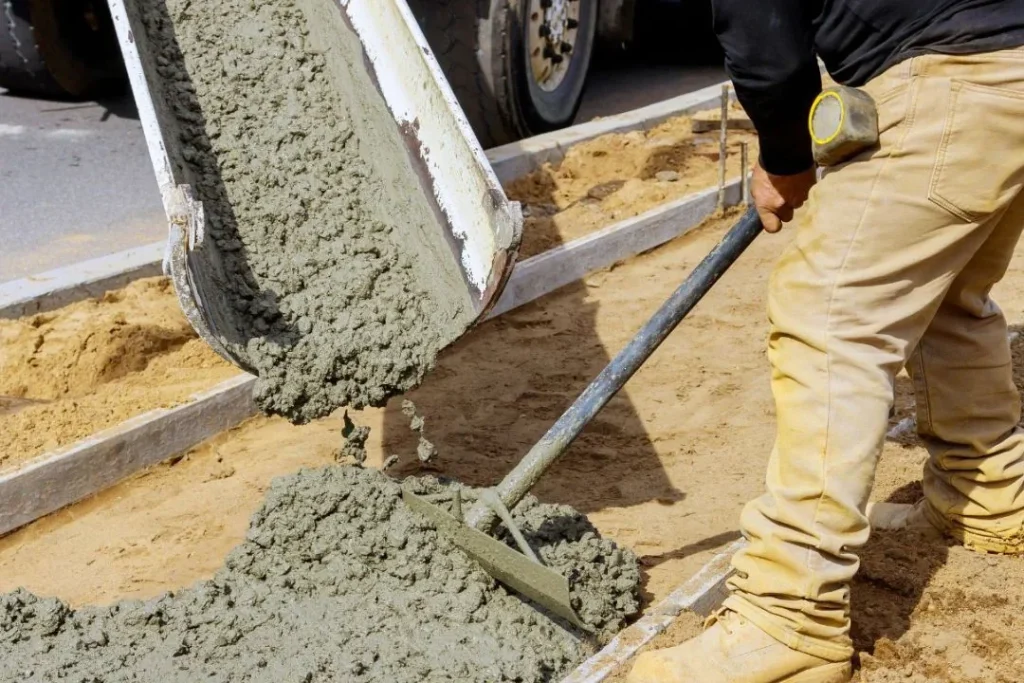
Some driveways fail earlier than they should because the original work was not done properly. Inadequate sub-base preparation, incorrect water-to-cement ratios, poor curing, and missing or badly placed control joints all shorten the life of a slab. Queensland’s building regulator outlines the standards that apply to concrete work, including shrinkage cracking, falls, and cracking at corners and penetrations, which are common signs that the original pour did not meet the required standard.
If your driveway is failing well before it should be, the original workmanship is worth considering as a factor. A replacement done properly, with the right base preparation and mix design, should last significantly longer.
Making the Call
The decision comes down to whether the slab is structurally sound or not. Surface damage on a stable slab is repairable. A slab that is lifting, sinking, cracked across multiple panels, or sitting on a compromised base is not a repair job. It is a replacement.
Getting a qualified concreter to assess the slab in person is the most reliable way to know which situation you are dealing with. A visual inspection from the surface only tells part of the story.
If you are also thinking about other concrete work around the property, a concrete pathway or other flatwork can often be planned and poured at the same time, which reduces mobilisation costs and keeps the site disruption to one period.
Get a Straight Answer on Your Driveway
If your driveway has been giving you trouble and you are not sure whether it needs repair or a full replacement, an onsite assessment will give you a clear answer. As a concreter Logan locals rely on for honest advice and quality work, our team covers Logan and the surrounding area.
Call (07) 3226 1839 or get in touch online to arrange your free quote.